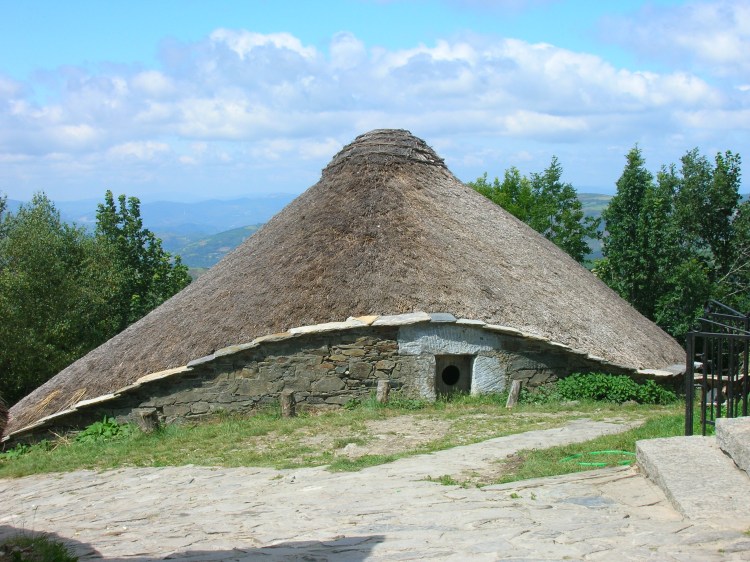
It is easy to marvel at the great architectural jewels of the camino, like the miniature Romanesque temple of Santa María de Eunate in Navarra that echoes the Holy Sepulchre in Jerusalem, the splendid Gothic cathedral of Burgos whose Chapel of the Constables is a veritable cathedral within a cathedral, or Gaudi’s inimitable archbishop’s palace in Astorga, where its vestibule transports you to the Mezquita of Córdoba all the while bathing you in the stained-glass light of León. But when walking through Galicia, the observant pilgrim is presented with the opportunity to appreciate something different, the vernacular architecture of northwestern Spain, most notably its pallozas (round houses).
Vernacular architecture is an imprecise term, generally given to buildings and structures erected either without the input of professional architects and engineers trained in academic settings, or fabricated without full-time masons, carpenters etc. It is not a pejorative term, but rather one that recognises traditional crafts and practices, and reliance on local materials and skills, all of which have historically informed the construction of the majority of the world’s buildings. Upon entering Galicia at O Cebreiro, many pilgrims catch their first sight of one particular type of vernacular architecture, the palloza, a circular or oval house of 10–20m diameter with low walls and a substantial and conical thatched roof. Their origins are unclear, but undoubtedly they have a strong cultural resonance within Galicia, and it is easy (but by no means secure) to imagine links with the castros — Iron Age settlements consisting of circular buildings — of northern Spain (like that at Castromaior, located on the Camino Francés between Portomarín and Palas de Rei).
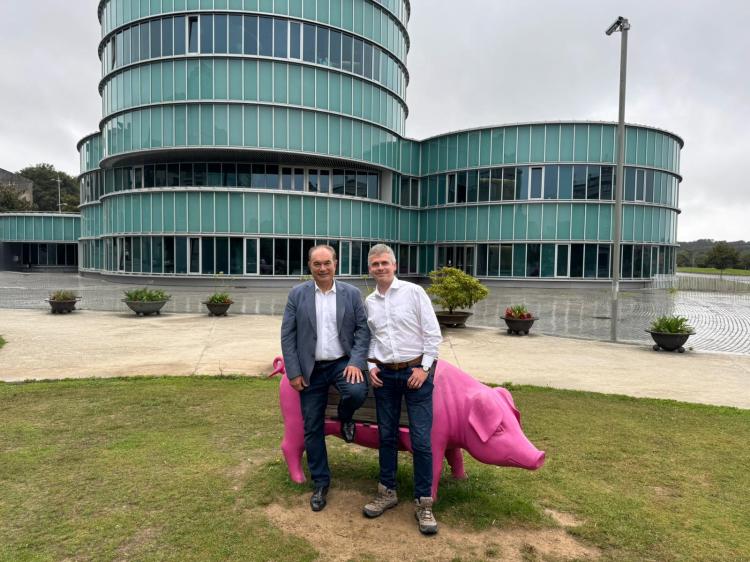
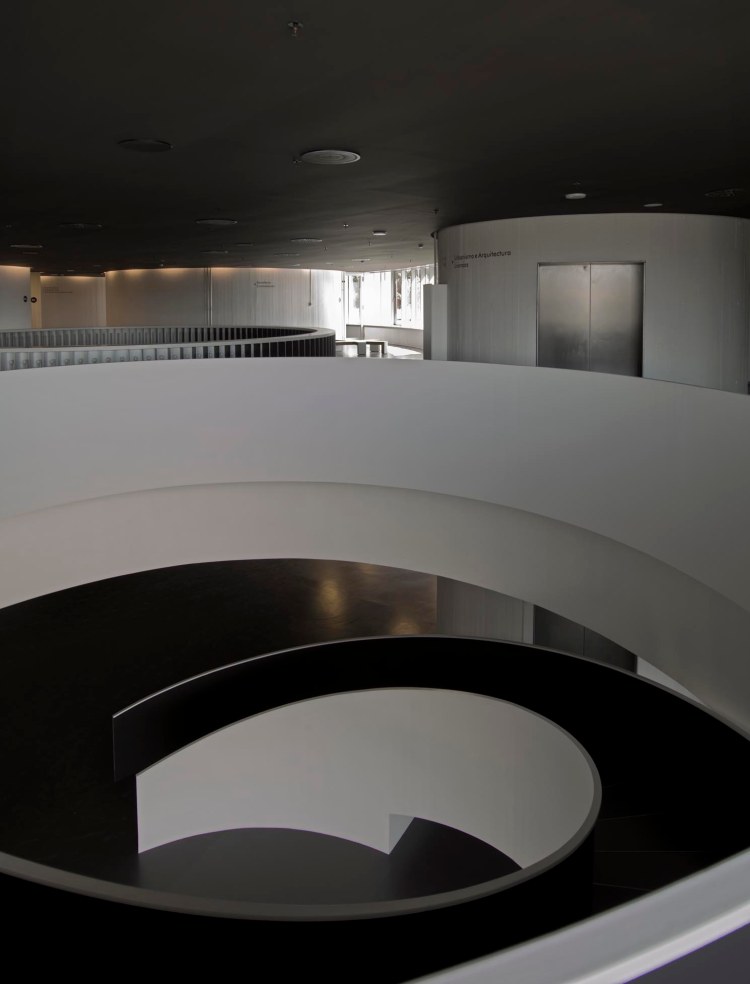
In September 2025, I had the privilege of receiving a tour of the Casa Consistorial (council building) of the concello of Lalín, a town of approximately 20,000 inhabitants, which is located about 50km southeast of Santiago de Compostela (and itself lying on the Camino Invierno), and receiving a gift of two books on the architecture of Galicia from the alcalde (mayor), Don José Crespo Iglesias. In homage to the palloza and castro, the architectural firm Mansilla + Tuñón (whose many achievements include winning the Gold Medal of Merit in the Fine Arts from Spain’s Ministry for Culture and Sport), designed the new Casa Consistorial in 2011 to be a ‘technological castro’. There are no corners in the complex; its working spaces are curved in imitation of the pallozas and even the walls are finished subtly to imitate them. Most notable is the circular council chamber where the elected members meet, arranged around an open space, intended to invoke the presence of elders sitting and deliberating around the central hearth of a palloza. It is, as Crespo Iglesias points out, an emblematic building that takes the architectural traditions of Galicia and elevates them to a global stage.[1]
Vernacular buildings, whether in the form of the increasingly rare palloza or the much commoner hórreo (elevated granary), may not be ‘high’ architecture, but their outward simplicity belie their thoughtful design and construction, and they speak to the living traditions of the lands through which we pass.
[1] José Crespo Iglesias, ‘Foreword’ to Mansilla + Tuñón, Concello de Lalín: O Castro Tecnolóxico (Concello de Lalín, 2011), 5.
I also discuss these in more detail in: ‘Round houses & beehives: the vernacular architecture of Galicia’, Bulletin of the Confraternity of Saint James 160 (Spring 2026), 7–8.

