Finding love on the Camino
The title of this post might be a bit misleading because although it’s inspired by St Valentine’s Day, it’s not about those pilgrim romances that somehow develop while we’re all daily in a physically unattractive state that would never pass muster for a date in civil society. Rather it’s about a practice I encountered on…
Keep reading
Padrón, peppers and preaching
The town of Padrón lies about 25km south of Santiago de Compostela (for those of you who use alternative measurement systems, in miles that’s 15.5, or in Camino it’s a day’s walk), and is perhaps best known internationally for the pimientos de Padrón (Padrón peppers), small peppers fried in oil until they blister and are…
Keep reading
Santiago’s other feast day — 30th of December
As Christmas rolls around and Camino kids get excited at whether Santa Claus or the Reyes Magos will leave a pair of hiking boots in their stockings, a few might notice that the Christmas period also sees the feast of Santiago/St James. Some of you will have enjoyed the celebrations of the feast of Santiago…
Keep reading
Santiago peregrino (‘the pilgrim’): a saint just like you?
Since literacy levels were low in the middle ages, artists used a variety of iconographic means to communicate to their audiences, not least to help the viewer identify the subject of their works. Saints, in particular, were recognizable by how they dressed and by items associated with a defining event in their lives or their…
Keep reading
Remembering John Brierley (1948-2023)
A while back I was asked to pen a tribute to John Brierley (1948-2023), for the Camino Society Ireland. He was the author of the most significant set of guides to the Camino in the English language (I discussed the maps in them previously) and a key figure in the modern history of the Camino…
Keep reading
What is ‘authentic’ on the Camino?
What is ‘authentic’ on the Camino? It’s a word that gets bandied about a lot but — having recently looked at the Pórtico de la Gloria app (available to download here) — I want to put a thought out there. Speaking as a medieval historian, I have no problem saying that the Pórtico is the…
Keep reading
Sanctified in Stone: the consecration crosses of the cathedral of Santiago de Compostela
When you walk into the great cathedrals like those of Burgos, León or Compostela, it is easy to focus on the spectacular, like the Chapel of the Constables in Burgos, the stained-glass ensemble of León, and the high altar of Santiago de Compostela. Quite often these are architectural, artistic and spiritual gifts of later eras,…
Keep reading
Cash is king: money on the Camino
The euro, SEPA (Single European Payments Area), Revolut — they’ve all made paying for things on the Camino a lot easier in recent years. It’s not that long ago (only a little over twenty years) that a pilgrim would still have had to go to their local bank and put in an order for pesetas…
Keep reading
Queens and the Camino
Hello to Kate and her Crew on the way to Santiago! I thought a post on the work of a strong woman would be eminently appropriate, and who better than Urraca, Queen of León, Castile and Galicia (1081–1126) — a prudent and modest Jezebel possessed of good sense (in the mixed judgement of Diego Gelmírez’s…
Keep reading
San Jorge vs Santiago (St George vs St James)
As next Tuesday (23rd April) is St George’s Day (San Jorge), I thought one of Spain’s favourite saints deserved a look in. Naturally, he has some competition. But St George vs St James — no contest, right? Well, as ever it depends from where you’re looking, especially if you’re on the Camino Aragonés or Camino…
Keep reading
The Quintana façade: cover-ups in plain sight
The history of the Quintana façade is that of a cover-up, and I mean that literally, not metaphorically — after all, the historical links between the square and fascism are still openly on display, and that is an issue that many places on the Camino have sought to remove from memory. Instead, this cover-up is…
Keep reading
Guides and Guidebooks: Good and Bad
The recent passing of John Brierley, the author of some of the most popular and high-quality guidebooks to the Camino, had me thinking about guides and guidebooks. I was in Santiago de Compostela in June, finishing the Camino Francés that I began in 2021, and had two contrasting guide experiences. I bought a guidebook in…
Keep reading
The Irish-Spanish Inquisition Alliance
In a previous post I wrote about the medieval Spanish inquisition and its relationship with the Camino de Santiago. The Black Legend of the Inquisition in the early modern period – the horror story version of its activities created in Protestant Netherlands and Britain – still dominates the popular image. That is not to say…
Keep reading
The Pilgrim’s Crowbar: Stealing Relics in the Middle Ages
Medieval people went on pilgrimage for many reasons (e.g. seeking forgiveness, gratitude for favours received, as punishment etc.), but you’d be forgiven for thinking that theft would not be a motivating factor. After all, why would a devout person go on pilgrimage with the express aim of stealing, and especially to steal something holy? But…
Keep reading
Azabachería, the final façade…
Azabachería, the final façade… it sounds like the opening of a Patrick Steward Star Trek monologue. We might well say ‘boldly going where no peregrino has gone before’, because although this north façade of the cathedral is the first that most peregrinos pass as they finish the francés/primitivo/norte/ingles routes, it’s usually ignored in the rush…
Keep reading
Royal Pilgrims
The last time I was in Santiago de Compostela, it was crowded with Germans, most of whom were named Heckler & Koch. I could almost hear Malcolm Tucker from The Thick of It in my head swearing that there were enough goons hovering around to stage a coup d’état. In fact I probably haven’t seen…
Keep reading
Platerías facade
For many peregrinos, undertaking the Camino and visiting the cathedral of Santiago de Compostela gives them a connection with pilgrims past, and much of their spiritual comfort comes from feeling part of a millennium-long continuum, rather than from visiting apostolic relics.[1] In this vein, the Platerías facade (Pratarías in Gallego) offers them one of the…
Keep reading
Santiago/St James in the Last Supper
Given that it’s Easter weekend I thought Santiago in the art of the Last Supper might make an interesting post. When we think of artistic representation of the Last Supper, the first painting that comes to mind is undoubtedly Leonardo da Vinci’s fresco in the Dominican convent of Santa Maria delle Grazie, in Milan.[1] But…
Keep reading
The Cross and the Camino: the Crucifix of Santo Domingo de la Calzada
Apologies to the sculptor and commissioners, but the newly installed crucifix of the cathedral of Santo Domingo de la Calzada in La Rioja (a town I really like and featured previously) – it looks like it was made of Playmobil (a Lego-like product, manufactured in Spain). It did get me thinking about what a crucifix…
Keep reading
Rattle and hum: the towers of the Obradoiro façade
Following on from my last post on the Obradoiro façade, where we looked at the central portion in particular, let’s now take a little closer look at the sides. In fairness, as you face the façade, your eyes are drawn to the centre such that it’s sometimes hard to appreciate the two flanking towers that…
Keep reading
The front of the Cathedral of Santiago de Compostela – the Obradoiro façade
It’s the one in all the postcards and selfies, and anyone who has walked/cycled that far has almost certainly had their moment immortalized in pixels and probably taken a few photos for others too. Everybody say ‘Quesoooooo’! The western façade of the cathedral was the brainchild of Fernando de Casas Novoa, who began construction in…
Keep reading
The four façades of the Cathedral of Santiago de Compostela
The cathedral of Santiago de Compostela, built over the supposed resting place of the Apostle James/Santiago, is one of the most incredible medieval buildings on earth. I, quite frankly, love it. The first time I entered it was on a late evening in August 2016, after a friend from America and another from Germany and…
Keep reading
The Camino and the Spanish Civil War (part 6 – Santiago de Compostela)
At the east end of the cathedral (the ‘back’, so to speak) the square known as Praza da Quintana is divided into two levels, the lower Quintana de Mortos (‘Square of the Dead’) used to be a cemetery until the end of the eighteenth century, and above the steps lies the Quintana de Vivos (‘Square…
Keep reading
Medieval Mapping – a superior technique for a modern pilgrim?
When chatting about guides and maps to the Camino, John Brierley’s A Pilgrim’s Guide is often spoken of approvingly, particularly for its maps. Indeed, a separate smaller maps-only versions of his guide to the Camino Francés and Camino Portugués are also available. Part of the reason they are so successful is that they follow a…
Keep reading
The Camino and the Spanish Civil War (part 5 – Burgos)
I’ve been to the village of Tardajos three times (10km west of the centre of Burgos), in 2016, 2018 and 2022, and if you’ve walked the Camino Francés, you’ve certainly passed through it too. When I was there in 2018 I noticed something that surprised me; the name of the principal street was Calle General…
Keep reading
The Camino and the Spanish Civil War (part 4 – La Rioja)
There’s one person you’re bound to meet on your Camino, and if you don’t find him at first, keep looking and like Where’s Wally? (or Where’s Waldo? in the USA), he’ll eventually pop up — he’s José Antonio Primo de Rivera, and I first spotted him in La Rioja. You enter the famous winemaking region…
Keep reading
Jacques de Molay – last Grand Master of the Knights Templar
There’s an awful lot of junk written about the Order of the Knights Templar, and it’s not just the fault of Dan Brown’s The Da Vinci Code – it stretches back at least as far back as the eighteenth century founding of the Freemasons, and ultimately has it roots in the events of the Order’s…
Keep reading
The Camino and the Spanish Civil War (part 3 – Navarra)
Alto del Perdón, just south of Pamplona, features in almost every Camino guide thanks to a rust-coloured iron art installation of medieval pilgrims struggling into the wind, accompanied by the legend ‘Where the way of the wind meets that of the stars’ (Donde se cruza el camino del viento con el de las estrellas). Alto…
Keep reading
The Spanish Inquisition and the Camino
The Inquisition was an office within the Catholic Church that dealt with matters of religious orthodoxy (proper belief and practice), and the Spanish Inquisition’s reputation is not simply a result of its activities, but also of propaganda wars of the sixteenth century and later. As Spain increasingly portrayed itself as a champion of Catholicism and…
Keep reading
The Camino and the Spanish Civil War (part 2 – Navarra)
As you walk through Pamplona, you are guided along the Camino by the usual yellow arrows and occasional blue sign, but also by a series of shiny aluminum discs embedded in the pavements, with an engraved shell-star and a little biker symbol (I’ll confess that it was probably my third visit to Pamplona when I…
Keep reading
How to read a (church) door
One of the most common scenes you’ll see over an external church door is the Last Judgement, where all the dead are summoned and Christ grants heaven to some and condemns others to hell (each according to their merits). The sculpturing of these doors is amazing and was executed according to a universally understood design…
Keep reading
The Camino and the Spanish Civil War (part 1)
You might not notice it, but the Spanish Civil War (1936–39) is a conflict still alive in Spain. Any Spanish person you meet of 60 years or older (e.g. some of the hospitalero who run the albergues you stay in) will not simply be old enough to have lived under the dictatorship, but will have…
Keep reading
Compostela — ‘Field of the Star’?
In a previous post I mentioned seeing the Perseid meteor shower about halfway between Burgos and León and it got me thinking about the origins of the name Compostela, which some suggest comes from the Latin Campus Stellae ‘Field of the Star’. Etymologies — the origin and explanations of names — can be fun. For…
Keep reading
Know your Camino architecture: Romanesque and Gothic
Do you have a favourite type of medieval architecture? Weird question? Personally, as a medieval nerd I’m a bit torn between Romanesque and Gothic, but I think the older Romanesque wins out. Why? Well firstly it comes down to what they can and can’t do. Romanesque and Gothic are readily identifiable by their trademark arches;…
Keep reading
Eucalyptus — a (un)welcome smell on the Camino?
Eucalyptus is one of the smells I associate with the Camino, particularly stretches of the Camino del Norte/Primativo, and while I enjoy the sweetness that fills the air as its thimble-like seed capsules crunch underfoot in the early morning, I can’t help but wish it wasn’t there. Perhaps that’s because one interloper rarely likes another?…
Keep reading
So the donkey stuff again…
So I was asked to clarify about the donkey stuff in my first blog post (‘The oldest guide to the Camino’) — specifically about how it’s done! I mean, really? That’s what you want to know? Well, in lieu of finding and posting a video to something that would probably get me fired should my…
Keep reading
And they say that he got crazy once and that he tried to touch the sun…
One of the most beautiful sights on the Camino is the sky above. I recall lying in a field one night in August 2016 along with my friend Jay and a group of five or six other companions outside Carrión de los Condes, watching the annual Perseid meteor shower over the Meseta — the inspiration…
Keep reading
A recipe for pleasure: Tarta de Santiago (Santiago’s Cake)
Tarta de Santiago (or Torta de Santiago in Galego, the language of Galicia) is one of my favourite deserts and is a wonderful expression of what is best in Spanish cooking — good ingredients used simply but effectively. Essentially, it’s a flat cake of almonds, eggs and sugar, in roughly equal measure, which mightn’t sound…
Keep reading
The oldest guide to the Camino
Keeping donkeys for oral sex does not seem like the kind of thing you would normally associate with a travel guide, especially one dedicated to a pilgrimage, but sure enough there it is in the oldest guide book to the Camino, the twelfth-century Pilgrim’s Guide in the Codex Calixtinus: In some places, like Vizcaya and…
Keep reading
The botafumeiro: the oldest swinger in town
Apologies for the bad pun in the title, but one of the most impressive of all sights for pilgrims who reach Santiago de Compostela is the swinging of the botafumeiro — the great incense burner that hangs from the ceiling of the cathedral. The botafumeiro (‘smoke expeller’) is essentially a version of the thurible (hand-swung…
Keep reading

The wine of La Rioja
La Rioja is the smallest of Spain’s autonomous regions and is synonymous with quality wine in the way that Bordeaux is in France or Napa Valley in the US. Indeed, it’s sometimes known as the Bordeaux of Spain, not least because French winemaking techniques were introduced to it in the later nineteenth century, which really…
Keep reading
Yellow arrows and the Shell symbol
The yellow arrows and the scallop shell vie with each other for the honour of most recognisable symbol of the Camino and I think every perigrino’s heart has lightened on seeing them on those rare occasions when we’ve gone off the beaten track. While the shell has a long association with the Camino, the yellow…
Keep reading

Portmagee, Co. Kerry: the origins of an Atlantic smuggling village
My latest book – a history of the village of Portmagee, Co. Kerry from the Bronze Age to modern times – is now available to buy from Four Courts Press (2023).
Keep reading

Tigernán Ua Ruairc and a twelfth-century royal grant in the Book of Kells
A study of the meeting of one of medieval Ireland’s most powerful kings and its most famous book. (Maynooth Studies in Local History, Four Courts Press, 2020).
Keep reading
Denis Casey
I am a writer, historian and university educator, from Co. Kerry, Ireland, with a passion for exploring links between Ireland and Spain.
Keep reading
Yellow arrows and the Shell symbol
The yellow arrows and the scallop shell vie with each other for the honour of most recognisable symbol of the Camino and I think every perigrino’s heart has lightened on seeing them on those rare occasions when we’ve gone off the beaten track. While the shell has a long association with the Camino, the yellow…
The botafumeiro: the oldest swinger in town
Apologies for the bad pun in the title, but one of the most impressive of all sights for pilgrims who reach Santiago de Compostela is the swinging of the botafumeiro — the great incense burner that hangs from the ceiling of the cathedral. The botafumeiro (‘smoke expeller’) is essentially a version of the thurible (hand-swung…
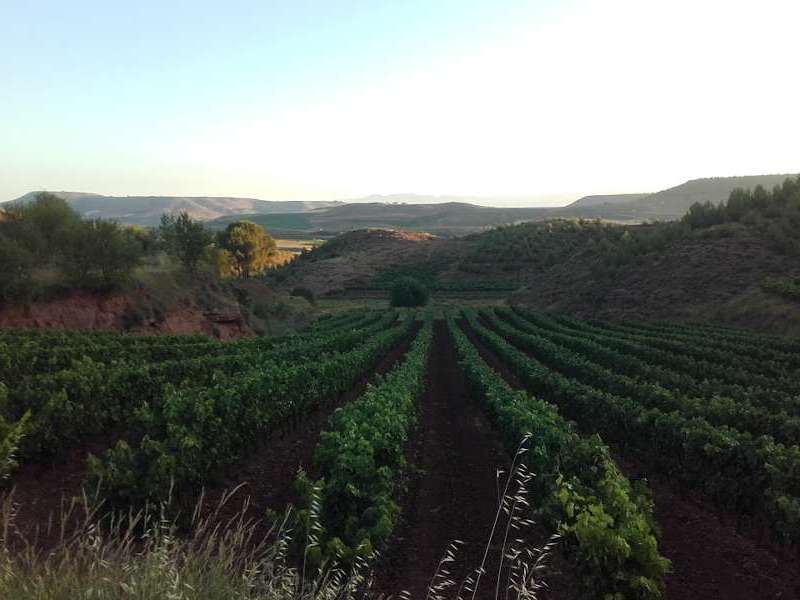
The wine of La Rioja
La Rioja is the smallest of Spain’s autonomous regions and is synonymous with quality wine in the way that Bordeaux is in France or Napa Valley in the US. Indeed, it’s sometimes known as the Bordeaux of Spain, not least because French winemaking techniques were introduced to it in the later nineteenth century, which really…

About
A blog about the Camino de Santiago, generally with a historical twist, but also with whatever takes my fancy, including wildlife, books, food and interesting experiences. Open to suggestions for posts!
Alto del Perdón Baroque architecture Burgos Burgos Cathedral Callixtus II camino Camino del Norte Camino Francés Camino Portugués Camino Primativo Castille y León Codex Calixtinus Donkeys El País Vasco Emilio Mola Fernando de Casas Novoa Fernando of Aragon Finisterre Flora and Fauna Francisco Franco Galicia Gothic architecture Isabella of Castile José Antonio Primo de Rivera Kingdom of Aragon Kingdom of Castile La Rioja León León Cathedral Los Reyes Católicos Navarra Obradoiro Pamplona Perseid meteor shower Pilgrim’s Guide praza do obradoiro Ramón Bengaray Zabalza Romanesque architecture Santiago Santiago de Compostela Santiago de Compostela Cathedral Spanish Civil War (1936-39) Spanish Inquisition Tardajos Wildlife
Subscribe to My Blog
Get new content delivered directly to your inbox.
- Patron saints for the times in which we live
- Finding love on the Camino
- Kerry and the Spanish Civil War (2)
- Padrón, peppers and preaching
- Kerry and the Spanish Civil War (1)
- Santiago’s other feast day — 30th of December
- Santiago peregrino (‘the pilgrim’): a saint just like you?
- Remembering John Brierley (1948-2023)
- What is ‘authentic’ on the Camino?
- Sanctified in Stone: the consecration crosses of the cathedral of Santiago de Compostela
- Cash is king: money on the Camino
- Queens and the Camino
- San Jorge vs Santiago (St George vs St James)
- The Quintana façade: cover-ups in plain sight
- Guides and Guidebooks: Good and Bad
- The Irish-Spanish Inquisition Alliance
- The Pilgrim’s Crowbar: Stealing Relics in the Middle Ages
- Azabachería, the final façade…
- Royal Pilgrims
- Platerías facade
Alto del Perdón Baroque architecture Burgos Burgos Cathedral Callixtus II camino Camino del Norte Camino Francés Camino Portugués Camino Primativo Castille y León Codex Calixtinus Donkeys El País Vasco Emilio Mola Fernando de Casas Novoa Fernando of Aragon Finisterre Flora and Fauna Francisco Franco Galicia Gothic architecture Isabella of Castile José Antonio Primo de Rivera Kingdom of Aragon Kingdom of Castile La Rioja León León Cathedral Los Reyes Católicos Navarra Obradoiro Pamplona Perseid meteor shower Pilgrim’s Guide praza do obradoiro Ramón Bengaray Zabalza Romanesque architecture Santiago Santiago de Compostela Santiago de Compostela Cathedral Spanish Civil War (1936-39) Spanish Inquisition Tardajos Wildlife
Alto del Perdón Baroque architecture Burgos Burgos Cathedral Callixtus II camino Camino del Norte Camino Francés Camino Portugués Camino Primativo Castille y León Codex Calixtinus Donkeys El País Vasco Emilio Mola Fernando de Casas Novoa Fernando of Aragon Finisterre Flora and Fauna Francisco Franco Galicia Gothic architecture Isabella of Castile José Antonio Primo de Rivera Kingdom of Aragon Kingdom of Castile La Rioja León León Cathedral Los Reyes Católicos Navarra Obradoiro Pamplona Perseid meteor shower Pilgrim’s Guide praza do obradoiro Ramón Bengaray Zabalza Romanesque architecture Santiago Santiago de Compostela Santiago de Compostela Cathedral Spanish Civil War (1936-39) Spanish Inquisition Tardajos Wildlife
 Denis Casey